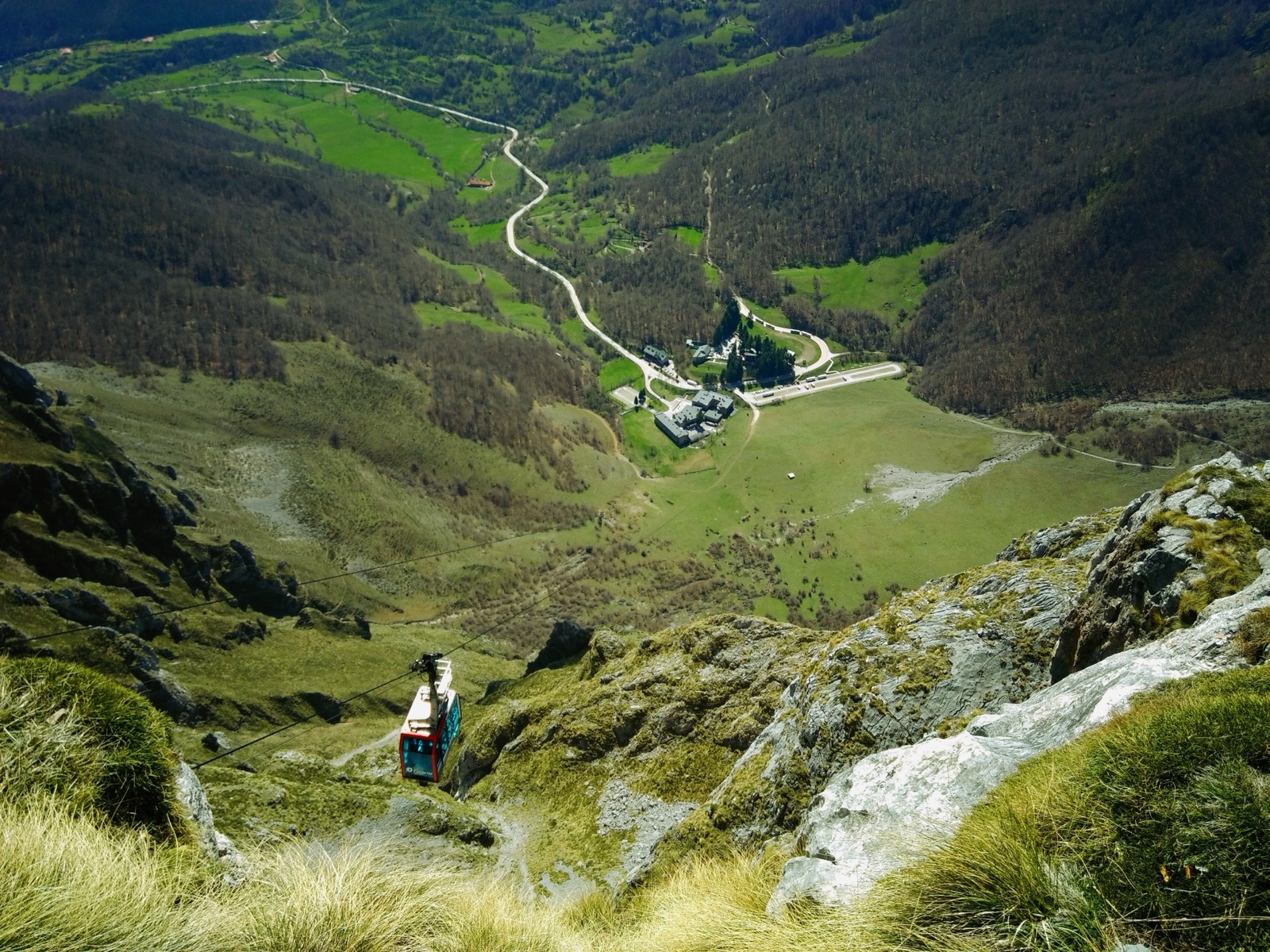
Camping in the Picos de Europa: Campsites, Wild Camping Rules and Bivouacs
You cannot pitch a tent wherever you like in the Picos de Europa: wild camping is not allowed in the national park, and bivouacking is allowed above 1,600 m only, from an hour before sunset to an hour after sunrise. What you can do is base yourself at one of the campsites in the valleys around the park, several of them right at the trailheads, and walk or bus into the mountains each day. This guide sets out the rules, the main campsites on each side of the range with their seasons and prices, what campervans can and cannot do, and when a mountain refuge is the better choice.
Camping in the Picos at a glance
| Question | Short answer |
|---|---|
| Wild camping? | Not allowed in the national park |
| Bivouac? | Allowed above 1,600 m, tent up an hour before sunset, down an hour after sunrise |
| Fires? | Lighting fires without permission is prohibited |
| Best bases | Cangas de Onís, Arenas de Cabrales, Potes, Valdeón |
| Season | Most campsites open from late March to mid or late October |
| Campervans overnight | Use campsites; overnight stays are banned at places such as the Pandébano car park |
The rules: camping, bivouac and fires
The park’s own rules for walkers are short and clear. Wild camping is not allowed in the national park; bivouacking is allowed above 1,600 m. Bivouac tents may be put up an hour before sunset and must be taken down an hour after sunrise. Lighting fires without permission is prohibited.
What that means on the ground:
- A tent in a meadow by the road is wild camping, even for one night, and it is not allowed inside the park.
- A bivouac is a night out on the mountain, high up and short: you arrive late, sleep and leave early. It is for walkers on multi-day routes, not for a base camp.
- No campfires and no stoves on open fires; use the campsites and refuges for cooking.
The park also reminds walkers that, as a general rule, bathing in the lakes and rivers is prohibited, and that dogs may not be let off the lead in the national park. Springs outside the villages are classed as water without health control, so if you are bivouacking, carry your water.
Campervans and car parks
The same logic applies to vans. Some trailhead car parks are explicitly closed to overnight stays. At Pandébano, above Sotres, leaving a car anywhere else nearby brings heavy fines, and overnight stays in campervans or tents are not allowed there. The Pandébano car park has only 64 spaces for walkers and is a regulated car park with controlled access.
At the Lakes of Covadonga the road itself is closed to private vehicles during the regulation periods: during regulation periods, private vehicles are excluded 24 hours a day, except vehicles with express permission. In practice, campervans belong on campsites, and several of the campsites below have dedicated pitches and services for them.
Choosing a side
The Picos are a ring of valleys around three massifs, and no road crosses the high ground. A campsite on one side is a long drive from the sights on another, so choose your campsite by what you want to do:
| Side | Base | Best for |
|---|---|---|
| North-west, Asturias | Cangas de Onís, Soto de Cangas, Avín | Covadonga and the lakes |
| North, Asturias | Arenas de Cabrales | The Cares route, Bulnes, Sotres |
| East, Cantabria | Potes, Turieno | Fuente Dé, Santo Toribio, Liébana |
| South, León | Valdeón | The southern end of the Cares, quiet valleys |
Our map guide explains the layout of the range, and the where to stay guide compares the towns themselves.
Covadonga and Cangas de Onís
This is the most popular side, with the lakes, the sanctuary and the busiest roads.
Camping Covadonga, Soto de Cangas
Camping Covadonga is at Soto de Cangas, 5 km from Covadonga; Cangas de Onís is 4 km away. It stands on the banks of the Covadonga and Güeña rivers, with a bar, restaurant, social room and supermarket. Camping Covadonga has 111 pitches, and in 2025 a pitch at Camping Covadonga cost €20.
It is well placed for the lakes. A shuttle runs every 30 minutes between Cangas de Onís and Covadonga from 7:40 to 19:00, and in the regulation period the lakes buses leave from Cangas de Onís bus station. There is also a car park for the sanctuary close by: the El Bosque car park, 4 km out past Soto de Cangas, opens at Holy Week and in July and August.
Camping Picos de Europa, Avín
East of Cangas, in the municipality of Onís, Camping Picos de Europa at Avín is open from 23 March to 31 October. It lies at Avín (Onís) on the river Güeña, at the foot of the north slope of the western massif, a starting point for walking to the Lakes of Covadonga.
The regional tourism board lists indicative prices:
| Item | Price |
|---|---|
| Adult | €5.50–6 |
| Child | €4 |
| Individual tent | €5–6 |
| Family tent | €6–7 |
| Car | €4 |
| Campervan | €7–8 |
High season there runs from 1 August to 1 September. Treat these as a guide; confirm current rates with the campsite when you book.
Arenas de Cabrales and the Cares
Arenas de Cabrales is one of the main gateways to the Picos de Europa. From here the AS-264 runs 6 km to Poncebos, where the Cares route starts and the funicular climbs to Bulnes.
Camping Naranjo de Bulnes
Camping Naranjo de Bulnes is a mountain campsite at Arenas de Cabrales. It stands beside the river Cares, about 30 minutes from the beaches of eastern Asturias. It is a natural base for the Cares route and for Bulnes, and for the Cabrales cheese caves: Cabrales cheese matures in natural caves used individually or jointly, and the Cabrales Cheese Fair is held in Arenas de Cabrales on the last Sunday of August.
Camping here also solves the parking problem at Poncebos. In 2026 the Arenas–Poncebos buses left Arenas from 8:15 to 13:00 and from 17:00 to 19:00, roughly every hour. The bus from Arenas to Poncebos takes about 15 minutes and costs €1.55 one way and €3.10 return. Three car parks are set up in Arenas de Cabrales for the bus plan, so you can leave the car near the campsite and ride to the trailhead.
Potes and Liébana
The Cantabrian side is the warmest and often the driest. Like the rest of Liébana, Potes has a Mediterranean-type microclimate that allows vines to be grown, and the campsites are within easy reach of Potes, Santo Toribio and the Fuente Dé cable car.
Camping La Isla, Turieno
Camping La Isla is at Turieno, 2.5 km from Potes. La Isla lies beside the Deva at about 300 m, and La Isla has 106 pitches of 60 to 70 square metres, on natural grass among fruit trees. Its pool is open from 11 to 20 h. Members of a mountaineering federation get 10% off camping on showing their card, which is worth knowing if you carry a club membership card.
Camping La Viorna, Potes
Camping La Viorna is 1 km from Potes, on the road up to Santo Toribio de Liébana. La Viorna has 2 swimming pools. La Viorna opens from 22 March to 15 October 2027, so check its dates if you are planning a spring or autumn trip.
From the campsites to Fuente Dé
The CA-185 regional road connects Potes and Fuente Dé; measured as a cycling climb, the road from Potes to Fuente Dé is 22.7 km long with 809 m of ascent. The cable car at the head of the valley lifts you onto the high plateau: the Fuente Dé cable car climbs 753 m to 1,823 m in about 4 minutes. It closes on days of strong wind, so keep a flexible day in your plan. Our guide to Fuente Dé and Liébana covers the cable car and walks from the top.
Valdeón and the León side
The quietest side of the park is the Valdeón valley. The Valdeón valley lies between the western and central massifs and is known as the heart of the Picos de Europa; the Cares runs through it from south to north.
Camping El Cares, Santa Marina de Valdeón
Camping El Cares is at Santa Marina de Valdeón and accepts campervans and pets. Camping El Cares has been running since 1984. In the 2026 season Camping El Cares stays open until 7 December, unusually late for a mountain campsite.
Unmarked camping pitches there start at €19, and cabins for up to 4 start at €60 and bungalows for up to 6 at €130. From Valdeón you can walk the southern half of the Cares: Caín de Valdeón, the last village in the valley, is where the Cares route can be started on the León side.
When to camp
Most campsites around the Picos open in late March or April and close in October, with a few running later. The high summer weeks are the busiest, with Spanish holidays peaking in August.
What to expect through the year:
- Spring: green valleys and snow still on the peaks. The peaks around the lakes are often still snow-covered in spring, and snow can block the higher paths.
- Summer: the warmest and busiest months. In summer, thick fog can rise even on sunny days, so pack for rain as well as sun.
- Autumn: quieter, with shorter days. The lakes road stays regulated into October in 2026, and campsites begin to close.
- Winter: very few campsites are open, and in winter snow covers much of the territory, cutting off villages, until the spring thaw.
The valleys of the western and southern slopes are wet: in the valleys of the western and southern slopes, rainfall exceeds 1,500 mm a year. A tent with a good flysheet and a groundsheet that keeps the water out is not optional. Check our weather page before you go.
Camping kit for the Picos
Beyond the usual tent, sleeping bag and stove, a few things make camping here easier:
- Warm layers for the evenings. The valleys are low, but nights cool quickly, and the weather at the lakes changes quickly, so bring warm clothes.
- Waterproofs. The park’s weather is unreliable, so it is always worth carrying a light waterproof.
- Walking boots and poles for the trails, and a head torch for early starts.
- Water bottles. There is no drinking water along the Cares route, and the park strongly recommends not drinking from springs in the low zones of the park or where there are many livestock.
- Maps and offline tracks. GPS tracks for most of the waymarked paths can be downloaded from the park’s website.
Bivouacking in the high mountains
If you are walking a multi-day route, a bivouac above 1,600 m is permitted within the time window. Before you rely on it:
- Know the height. Many popular meadows are below 1,600 m. The Pandébano col lies at 1,212 m, for example.
- Plan for fog. At altitude, very thick fogs, known locally as encainadas, are very frequent, even in summer. If you may be becoming hypothermic, call 112.
- Leave word. Plan walks, check the forecast and never walk alone, or leave word of your route. If you leave your car for several days, put a note behind the windscreen with your route and dates.
- Pack it all out. Leave nothing at the bivouac site, and keep well away from water sources and livestock.
Refuges: the alternative to a tent
For most people walking more than a day in the high Picos, a refuge is a better plan than a bivouac. Most refuges are guarded for part of the year, with food and bunks with blankets; when the guardian is away part stays open, and places should be booked in advance. Refuge places are booked through reservarefugios.com.
A few examples:
- Vega de Ario in the western massif: the Vega de Ario refuge has 40 bunk beds and opens from May to October.
- Vegarredonda: the Vegarredonda refuge has 68 places and is guarded all year, with an emergency radio and meals.
- Vega de Urriellu, under the Naranjo: the Vega de Urriellu refuge stands at 1,960 m, has 96 places and is open from 15 March to 15 December.
Our Anillo de Picos guide explains the hut-to-hut circuit that links the refuges.
Camping with children
The valley campsites are good family bases, with pools at several of them and short walks nearby. Easy there-and-back or circular walks around the lakes take under 2 hours. For the Cares, remember that the path averages 1.5 m wide and often skirts big drops above the river, and that children under eight should never walk without holding an adult’s hand.
Camping with a dog
Dogs are welcome at several campsites, and Camping El Cares accepts pets. In the park itself, dogs may not be let off the lead, and on the Cares route extendable leads are banned and a fixed lead may be no longer than 1.20 m. Pets may travel on the lakes bus if there is a pet place on the bus or taxi, and must be on a lead in the park.
Tours from your campsite
If you would rather not drive the mountain roads, guided day trips leave from the coast and pass close to several campsites. The tours page lists trips to the lakes of Covadonga, to Bulnes with the funicular and a Cabrales cheese cave, and to Liébana and Potes.
Frequently asked questions
Is wild camping allowed in the Picos de Europa? No. Wild camping is not allowed in the national park; bivouacking is allowed above 1,600 m.
What are the bivouac hours? Bivouac tents may be put up an hour before sunset and must be taken down an hour after sunrise.
Can I sleep in my campervan at a trailhead? Not where it is banned, such as Pandébano, where overnight stays in campervans or tents are not allowed. Use a campsite.
Which campsite is best for the Cares route? Camping Naranjo de Bulnes in Arenas de Cabrales for the Asturian end, or Camping El Cares in Valdeón for the León end.
Which campsite is best for Fuente Dé? Camping La Isla at Turieno or Camping La Viorna near Potes, both on the Liébana side.
Are campsites open in winter? Most close in October. In the 2026 season Camping El Cares stays open until 7 December.