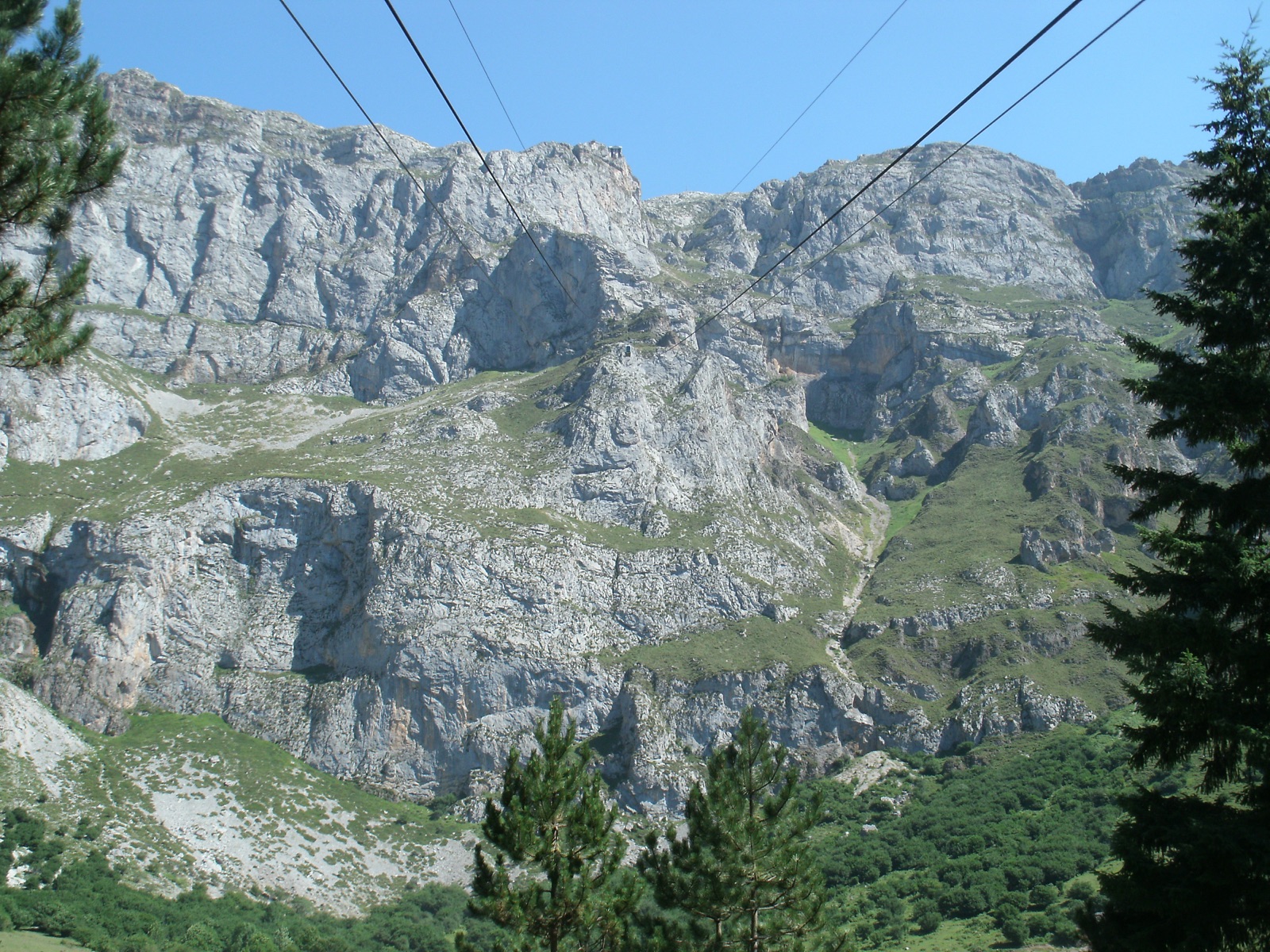
Fuente Dé, Potes and Santo Toribio: The Cable Car and the Liébana Valley
On the Cantabrian side of the Picos de Europa, the valley of Liébana is a world of its own: a green, sheltered basin ringed by mountains, reached through one of the longest gorges in Spain. At its head, beneath a vertical wall of rock, a cable car lifts you from the valley floor to the high mountains in a few minutes. Below it lie Potes, a stone town at the meeting of two rivers, and the monastery of Santo Toribio, one of the great pilgrimage sites of Christianity.
This guide covers the Fuente Dé cable car — how it works, when it runs and what to do at the top — the road through the Hermida gorge, the town of Potes and the monastery of Santo Toribio, with a plan for a day in Liébana.
Liébana at a glance
- The Hermida gorge, almost 22 km long and carved by the river Deva, is the longest gorge in northern Spain. It is the main road into Liébana from the coast.
- Potes is the valley’s main town, and its landmark is a medieval tower.
- Santo Toribio de Liébana, just outside Potes, is the monastery of the Lignum Crucis.
- Fuente Dé, at the head of the valley, is the base of the cable car into the central massif of the Picos.
All of Liébana lies within reach of the national park: the park descends from Spain’s first national park, the Montaña de Covadonga, declared by law on 24 July 1918, and the national park covers 66,030.36 ha in Asturias, León and Cantabria.
The Hermida gorge
The drive into Liébana is an experience in itself. The road follows the river Deva through the Hermida gorge, with limestone walls rising steeply on either side. Because the Hermida gorge, almost 22 km long and carved by the river Deva, is the longest gorge in northern Spain, allow time for the drive and for stops at the pull-ins along the way.
The Fuente Dé cable car
The ride
The cable car is the star of Liébana. From the valley station at Fuente Dé, it rises up the rock wall to a platform on the edge of the high mountains.
- The Fuente Dé cable car climbs 753 m to 1,823 m in about 4 minutes at 10 m/s; the cable is 1,450 m long, each cabin holds 20 passengers and the ride takes 3 minutes 40 seconds.
The ascent is steep and dramatic: the valley drops away beneath the cabin as the rock face slides past, and at the top you step out into a landscape of rock, scree and high pasture.
Opening hours
The cable car’s hours change through the year. For the autumn and early winter of 2026:
- From 14 September to 18 October the cable car runs 10:00–18:00 on weekdays and 9:00–18:00 at weekends; from 19 October to the end of the year 10:00–17:00 on weekdays and 9:00–17:00 at weekends; the last ascent is 15 minutes before closing.
- The cable car is closed on 24, 25 and 31 December and 1 and 6 January.
Hours vary through the seasons, so check the current timetable before you go.
Weather closures
Mountain weather rules the cable car. The cable car closes on days of strong wind, and the cable car has also closed for snow, storms and maintenance, so it is worth checking before you go. Closures for safety or bad weather give no right to compensation or a refund, so check the operator’s notices on the morning of your visit, and have a plan B.
Queues
The cable car is popular, especially in summer and on holiday weekends. With cabins of 20 passengers, waits can build at the valley station on busy days. Arrive early in the day, or come on a weekday outside the peak season.
At the stations
There are cafés at the bottom (200 seats) and the top (150); beside the upper one a south-facing balcony looks over the Cantabrian range, with the central massif to the north. Even if you do not plan to walk, the balcony alone justifies the ride, and a coffee at the top while the clouds move across the peaks is one of the simple pleasures of a day here.
With pets
Pets must travel in a closed carrier; the supplement is €10 return or €6 one way.
At the top: walks from the upper station
The upper station is a gateway to the central massif of the Picos, and several walks start there.
- Walks from the upper station include the Puertos de Áliva route, the Vega de Liordes circuit and the Horcados Rojos route.
They range from walks across the high ground to routes deep into the rocky heart of the massif, so choose one that matches your experience and the day’s weather, and ask at the station if in doubt. Whatever you choose:
- Plan walks, check the forecast and never walk alone, or leave word of your route.
- Springs outside the villages are classed as water without health control, so carry your own water.
- Dress for the mountains: at 1,823 m, it is much cooler and windier than in the valley, and cloud can roll in quickly.
Even without a long walk, a short stroll from the upper station takes you away from the crowds and into a landscape of limestone and silence. The Picos are the largest limestone formation in Atlantic Europe, with chasms more than 1,000 m deep and clear signs of glacial erosion, and the view from the top shows why.
Wildlife
Keep an eye out on the rocks and in the sky. Chamois live on the crags, roe deer and wolves in the forests, with the occasional bear; more than 100 bird species include the black woodpecker, capercaillie, griffon vulture and golden eagle. Scan the rock walls and ridges with binoculars; the high, open ground around the upper station is good country for spotting mountain wildlife.
Potes
The town
Potes is the heart of Liébana: a compact town of stone houses, bridges and narrow lanes at the meeting of two rivers. It is the natural place to stop for lunch between the cable car and the monastery.
The Torre del Infantado
The Torre del Infantado, a medieval tower where the Deva and Quiviesa rivers meet, is the landmark of Potes; it reopened to the public on 19 March 2011. The tower rises above the town centre and is the image most visitors take home.
Time in town
Give Potes an hour or two. Walk the old lanes on both banks, cross the bridges to see the houses rising above the water, and use the tower as your landmark. It is also the practical centre of the valley, with places to eat and shops for picnic supplies, which makes it a sensible base for a night or two.
Photography
- The cable car from below. From the valley station, the cabins look tiny against the rock wall; a wide lens captures the scale.
- From the cabin. Stand near the window for the view down the valley as you climb.
- The balcony. The south-facing balcony at the top is the classic viewpoint over the Cantabrian range.
- The light. Morning light is usually clearest, before cloud builds on the peaks.
- Potes. The Torre del Infantado and the old houses by the rivers photograph well in the late afternoon.
Santo Toribio de Liébana
The relic
A short drive above Potes, the monastery of Santo Toribio is one of the most important pilgrimage sites in Spain. The Franciscan monastery of Santo Toribio de Liébana, near Potes, keeps the Lignum Crucis, the largest known piece of the Cross. With Jerusalem, Rome, Santiago de Compostela and Caravaca de la Cruz, it is one of the holy places of Christianity.
The Jubilee Year
A Jubilee Year begins whenever the saint’s feast day, 16 April, falls on a Sunday, and the Door of Forgiveness opens for pilgrims. In Jubilee Years, pilgrims arrive from all over Spain and beyond, and the monastery is busier than usual.
Beatus of Liébana
The monastery is also a landmark of medieval culture: the works of Beatus of Liébana were created at the monastery.
Visiting
The monastery is close to Potes and easy to combine with the town. Dress respectfully, and remember that it is an active place of worship and pilgrimage.
The tour from Santander
If you are staying in Santander, a day tour links the whole valley.
Liébana, Santo Toribio and Potes from Santander. Through the Hermida gorge to the monastery of Santo Toribio and the village of Potes, with an optional cable car ride into the mountains. About 9 hours, departing from Santander.
The tours page lists it with live prices.
A day in Liébana
- Early morning: drive through the Hermida gorge to Fuente Dé, aiming to arrive as the cable car opens.
- Morning: ride up, enjoy the balcony, and take a short walk towards the Puertos de Áliva pastures.
- Lunch: back down to Potes, lunch in the old town and a look at the Torre del Infantado.
- Afternoon: up to Santo Toribio for the monastery and the view over the valley.
- Evening: stay in Liébana, or drive back through the gorge in the evening light.
Combining with the rest of the park
Liébana is the south-eastern corner of the Picos. The Lakes of Covadonga lie to the west, in Asturias, and the Cares gorge and Bulnes in the central massif to the north. See our guides to the Lakes of Covadonga and the Cares route and Bulnes.
Planning around the weather
The single most important thing to know about Fuente Dé is that the weather decides the day. The cable car climbs to 1,823 m, and conditions at the top can be very different from those in Potes.
- Check the operator’s notices on the morning of your visit; closures for wind are announced there.
- Watch the clouds. On days when cloud sits on the rock wall, the view from the top may be nothing but white. A clear morning is worth waiting for.
- Have a plan B. If the cable car is closed, Potes, Santo Toribio and the drive through the Hermida gorge still make a fine day.
- Go early. Clear skies are more common in the morning, and the queues shorter.
The national park and its rules
Fuente Dé sits on the edge of a national park with a long history. It has been a Biosphere Reserve since 2003, and the rules exist to protect a fragile high-mountain environment:
- Flying drones in the national park is restricted to limited management use and permitted research.
- Stay on marked paths, take your rubbish back down and do not disturb wildlife.
- Plan walks, check the forecast and never walk alone, or leave word of your route.
Two days in Liébana
- Day one: the Hermida gorge, Potes and the Torre del Infantado, then Santo Toribio in the late afternoon.
- Day two: Fuente Dé first thing, a longer walk from the upper station towards the Puertos de Áliva, and a slow return to Potes for the evening.
Staying overnight in the valley means you can be at the cable car as it opens, before the day-trippers from the coast arrive.
What to pack
- Warm and waterproof layers for the top.
- Walking shoes with good grip.
- Water and snacks; springs are not tested.
- Sunglasses and sun cream; the mountain sun is strong.
- Binoculars for chamois and vultures.
When to go
- Summer brings the longest hours and the best walking conditions at the top, but also the longest queues.
- Autumn is lovely in Liébana, with colour on the slopes and shorter queues; from 19 October the cable car closes at 17:00.
- Winter can bring snow closures, but also clear, cold days with the peaks white against the sky. Check the operator’s notices before setting out.
- Spring is green and quiet, with snow still on the high peaks.
Practical tips
- Check the cable car’s status on the morning of your visit; wind and weather close it without refund.
- Arrive early to beat the queues.
- Bring warm layers for the top, even in summer.
- Wear walking shoes if you plan to leave the upper station.
- Carry water; springs are not tested.
- Leave the drone at home: flying drones in the national park is restricted to limited management use and permitted research.
With children
The cable car is a thrill for children, and the short walks near the upper station are manageable for young legs. Keep them close on the balcony and near any drops, dress them warmly, and pick a clear day for the best views.
Accessibility
The cable car itself is the easiest way into the high mountains for anyone who cannot walk far, and the upper station has a café and viewing balcony. Beyond it, the paths are rough mountain tracks. Potes has cobbled lanes and some slopes.
Frequently asked questions
How high is the Fuente Dé cable car?
The upper station is at 1,823 m, 753 m above the valley station. The cable is 1,450 m long.
Can I take my dog on the cable car?
Yes, in a closed carrier; the supplement is €10 return or €6 one way. Dogs must be on a lead in the national park.
How long is the Fuente Dé cable car ride?
About 4 minutes: the ride takes 3 minutes 40 seconds and climbs 753 m to 1,823 m.
When does the Fuente Dé cable car open?
From 14 September to 18 October 2026, 10:00–18:00 on weekdays and 9:00–18:00 at weekends; from 19 October to the end of the year, 10:00–17:00 on weekdays and 9:00–17:00 at weekends. The last ascent is 15 minutes before closing.
Does the cable car close in bad weather?
Yes. It closes on days of strong wind and for other bad weather, and closures give no right to a refund.
What is the Lignum Crucis?
The largest known piece of the Cross, kept at the monastery of Santo Toribio de Liébana near Potes.
When is the Liébana Jubilee Year?
Whenever the feast of Santo Toribio, 16 April, falls on a Sunday.