Reference
Picos de Europa Weather: Seasons, Fog, Snow and the Best Time to Go
Picos de Europa weather this week
Lakes of Covadonga (1,070 m)
The five-day forecast for Lakes of Covadonga, updated through the day.
Forecast data from MET Norway (CC BY 4.0), summarised by day.
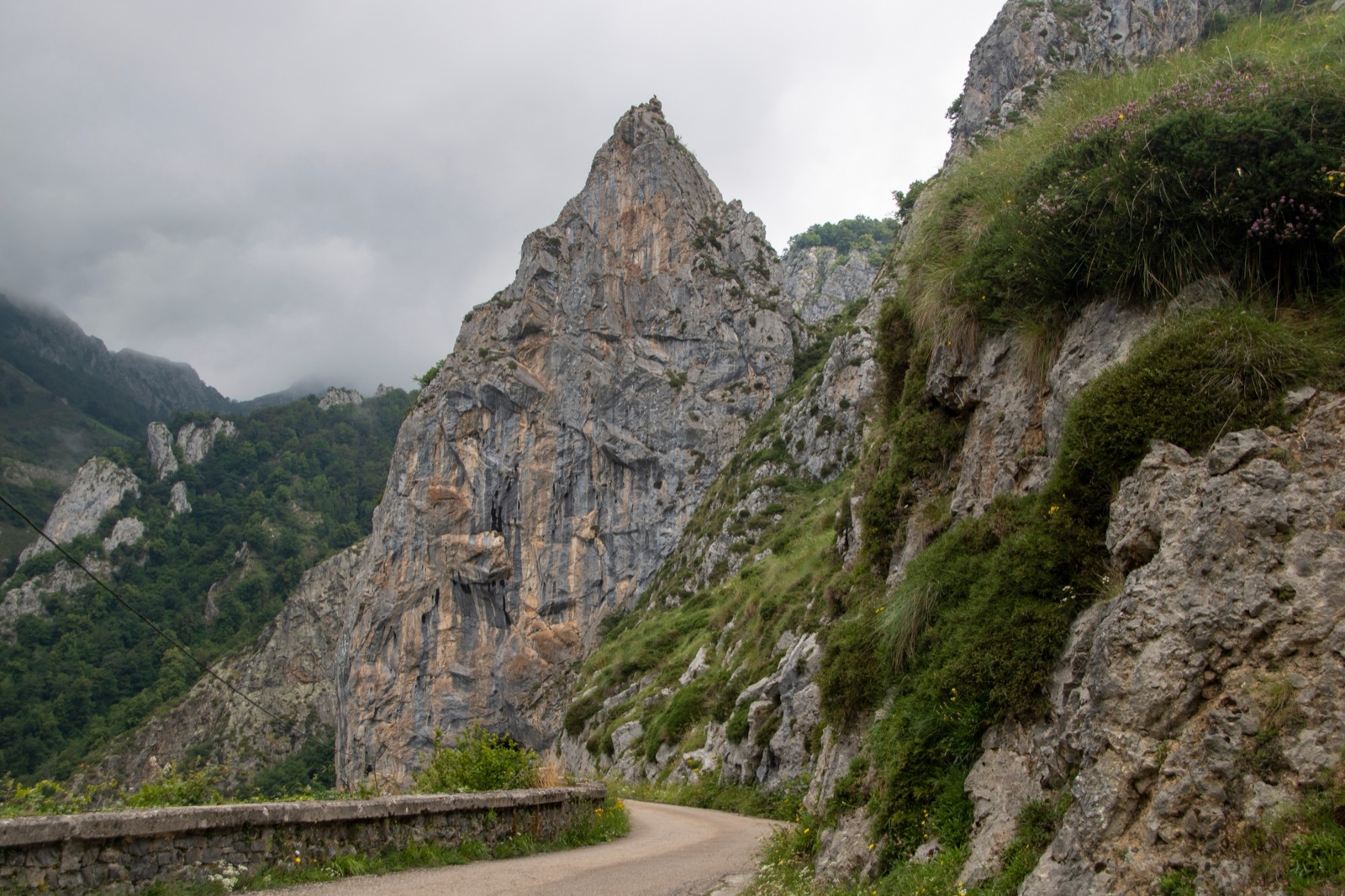
The Picos de Europa have a wet, changeable mountain climate. Spain’s environment ministry (MITECO) describes it as dominated by large swings in temperature; in the valleys of the western and southern slopes, rainfall exceeds 1,500 mm a year, and at altitude very thick fog is common even in summer. In winter, snow covers much of the range.
For walking and sightseeing, the most reliable months run from June to September: the refuges are staffed, the lakes bus runs and the gateway cities have their driest weather. Spring brings snow on the peaks and full rivers; autumn is quieter but wetter; winter brings snow and wind closures at the Fuente Dé cable car. In every month, plan around fog.
The short answer
- Summer (June–September): the driest months in the lowland records and the main walking season, though fog can rise even on sunny days.
- Autumn (October–November): fewer people and shorter timetables; November is the wettest month at both Oviedo and Santander in the averages below.
- Winter (December–February): snow covers much of the mountains and can cut off villages; the cable car closes on windy or snowy days.
- Spring (March–May): the thaw fills the rivers while snow lingers on the peaks; the Urriellu refuge opens on 15 March and Vega de Ario in May.
- Any month: check the mountain forecast the evening before and again on the morning of your trip.
Why the weather changes so fast
MITECO’s description of the park is the best summary. The climate varies within each season according to the prevailing wind. In midwinter it can switch quickly from several degrees below zero under a north wind to dry, strangely warm weather with south winds. In summer the reverse can happen, and thick fog rises on sunny days.
Height does the rest. Potes, in the valley of Liébana, lies at 291 m; Fuente Dé, at the foot of the cable car, at 1,094 m; the upper station at 1,823 m; and Torrecerredo, the highest peak in the national park, at 2,648 m. The weather at one level often has little to do with the weather at another. At the Lakes of Covadonga, the valley floor can be sunny while strong wind or fog at the lakes cuts visibility to a few metres.
What the weather stations say
AEMET, Spain’s state meteorological agency, publishes averages for 1981–2010 for its main stations. None of these stations is in the mountains, but three frame the range: Oviedo (336 m) on the Asturian side, Santander Airport (3 m) on the Cantabrian coast, and León (916 m) on the plateau to the south.
| Station | January max / min | July max / min | Precipitation a year | Days with rain (1 mm+) | Sunshine hours a year |
|---|---|---|---|---|---|
| Oviedo | 12.0 / 4.6 °C | 22.8 / 14.5 °C | 960 mm | 122.3 | 1,756 |
| Santander Airport | 13.6 / 5.8 °C | 23.6 / 16.0 °C | 1,129 mm | 123.6 | 1,649 |
| León | 7.1 / −0.7 °C | 27.4 / 12.2 °C | 515 mm | 74.9 | 2,673 |
What the figures tell you:
- The north side is mild and damp all year. January afternoons average 12.0 °C at Oviedo and 13.6 °C at Santander, far milder than León, and it rains on roughly one day in three.
- November is the wet month. It averages 115 mm at Oviedo and 157 mm at Santander. July is the driest at Oviedo, with 45 mm; Santander gets 52 mm.
- Fog is part of the climate even at low level. Oviedo averages 97.6 days of fog a year.
- Storms peak in late spring and summer. Oviedo averages 19.4 days of thunderstorm a year, with the most (3.6) in May; plan high walks for the morning and be off exposed ground if storms are forecast.
- The south is drier, sunnier and colder in winter. León gets 515 mm a year, 71.6 days of frost and 13.0 days of snow.
- The mountains are wetter and colder than any of these. Inside the park, rainfall in the valleys of the western and southern slopes exceeds 1,500 mm a year, and the high ground is far colder than the gateway cities.
Season by season
Spring: March to May
Winter snow lies over much of the territory until the spring thaw sets the torrents running. The peaks around the lakes are often still snow-covered in spring, which makes for beautiful views, but snow can also block the upper sections of walks such as Vega de Ario, and the park’s route pages say not to attempt Horcados Rojos in snow or ice.
The refuges open in stages: Vega de Urriellu is guarded from 15 March, Vega de Ario from May. On the Asturian side, the lakes road is closed to private cars at Easter and on some spring dates. In 2026 that meant 28–31 March, 1–12 April (Easter), 18, 19 and 25–30 April, 1 May and May weekends, so check the calendar before you drive up.
Summer: June to September
This is the main season. At Oviedo, July averages a daily maximum of 22.8 °C and just 45 mm of rain. The refuges are open, the lakes bus runs (the road is closed to private cars from 1 June to 18 October in 2026), and the Bulnes funicular keeps its long high-season hours of 10:00–22:00.
Two summer hazards catch people out:
- Fog. The park warns that at altitude very thick fogs, known locally as encainadas, are very frequent, even in summer. A bright morning at the bottom of a valley is no guarantee of a view at the top.
- Heat in the gorges. The Cares route runs at a low altitude that avoids the harsh weather of the high zones, but that also makes it the warm option. The canyons are sheltered enough from the humid winds for Mediterranean vegetation to grow in their lower parts, and holm oaks cling to the rocks of the Cares gorge. There is no drinking water along the route, so start early and carry plenty.
Autumn: October and November
Autumn is quieter and often settled for spells, but it is the wettest part of the year in the lowland records, and the timetables shrink. From 19 October the Fuente Dé cable car runs 10:00–17:00 on weekdays. From 1 October the last lakes bus up leaves at 16:00 and the last down at 19:05.
Wind is the main threat to plans at Fuente Dé. The cable car closes on days of strong wind, and its operator reported exactly that on 29 September 2026. Snow can arrive early too: the cable car closed for snow in Liébana on 21 November 2025. Closures for safety or bad weather give no right to a refund, so check the operator’s notices on the morning of your visit.
Winter: December to February
MITECO describes winter snow covering much of the territory and cutting off villages. The cable car closes on 24, 25 and 31 December and on 1 and 6 January, and wind closes it on other days: it shut for a wind alert on 9 December 2025 and, as a precaution, on 18 February 2026. On the lakes road, cars are banned again from 1 to 8 December, when the bus runs instead.
High routes change character completely. The Urriellu refuge is guarded only until 15 December, and with snow or ice the path is dangerous at Collado Vallejo; in those conditions it is only for mountaineers with winter technique, crampons and ice axe. The park publishes AEMET’s avalanche-risk information for the protected area, and the Fuente Dé walks are best left to experienced parties.
How cold can it get? On 7 January 2021, a weather station set up by amateurs at Vega de Liordes, a high meadow reached on foot from Fuente Dé, recorded −35.8 °C. AEMET does not ratify amateur measurements like this because the stations are outside its network, but the reading shows what the high ground can do. Down in León, January nights average −0.7 °C.
Fog: the hazard to plan around
Fog is the weather that most often turns a good walk into a dangerous one, and it can form in any season.
- Where. At altitude, and often around the lakes, even when the valleys are clear. The cable car operator warns that fog can appear at any time of year around the upper station.
- What the park says. Several route pages, including Vega de Ario and Horcados Rojos, tell walkers not to set out in fog. If it catches you on the way, find a little shelter and wait for it to clear, even if that takes hours, and never try to move on at night over unknown ground.
- What to carry. A map, a compass or GPS track, warm layers and a light waterproof. The park calls its weather unreliable for good reason.
- If it all goes wrong. Mobile coverage is limited, but the connection to 112 is much wider. Call 112 if anyone may be becoming hypothermic.
At the lakes, the local visitor site’s advice on a foggy morning is simpler: have a coffee in one of the bars near the lakes and wait.
North, south and the valleys in between
The Picos straddle Asturias, Cantabria and León, and the weather differs across them. The Asturian and Cantabrian sides face the sea and share the mild, damp pattern of Oviedo and Santander. León, on the plateau to the south, is far drier and sunnier, with 2,673 hours of sunshine a year against 1,756 at Oviedo.
Liébana, the valley of Potes on the Cantabrian side, has its own character. Like the rest of the valley, Potes enjoys a Mediterranean-type microclimate that allows vines to grow, and those vines give the local orujo. Our article on Potes covers the town. Within the park itself, though, the valleys on the western and southern slopes still receive more than 1,500 mm a year, so do not expect dry weather just because you are south of the watershed.
How the weather affects the main sights
- Lakes of Covadonga. The weather at the lakes changes quickly, so bring warm clothes even on a sunny day in Cangas de Onís. See our lakes guide for the bus and access rules.
- Fuente Dé cable car. At 1,823 m the upper station is much cooler and windier than the valley, and strong wind closes the cable car. See our guide to Fuente Dé and Liébana.
- The Cares gorge. Low and warm in summer, and the risk of falling rock rises on days of heavy rain or strong wind and on the days immediately after.
- Bulnes funicular. It runs 2,227 m inside the mountain, which makes it one of the better options on a grey day.
- Covadonga. The basilica and the Holy Cave below the lakes open 8:00–20:00, with free entry and no booking, so they work on the wettest day.
- Potes and Santo Toribio. Valley sights that work in almost any weather, and a sound plan B when cloud sits on the peaks.
Build a flexible plan
The simplest way to beat the weather in the Picos is to pair every high day with a low one and decide which is which the evening before, once you have seen the forecast.
- Based in Cangas de Onís: the lakes and the walks towards Vega de Ario or Ordiales on a clear day; the sanctuary of Covadonga and the old bridge in Cangas de Onís when cloud is down.
- Based in Liébana: the Fuente Dé cable car and the walks from the upper station when the tops are clear and the wind is light; Potes, the Torre del Infantado and Santo Toribio when they are not.
- Based near the Cares: the walk up to the Vega de Urriellu refuge or the Cares gorge in settled weather; the Bulnes funicular and a Cabrales cheese cave on a grey day.
Build a spare day into any trip that hangs on one high-mountain objective. A walk to Horcados Rojos or Urriellu that has to happen on one fixed date is exactly the kind of plan that tempts people to set out into fog.
Checking the forecast
- AEMET’s mountain forecast. Spain’s weather agency publishes a dedicated mountain forecast for the Picos de Europa. Read it the evening before and again in the morning.
- The cable car operator. Fuente Dé posts closures for wind and snow on its website, often on the day itself.
- The park. The national park’s website carries its current alerts and publishes AEMET’s avalanche-risk information.
Plan walks, check the forecast and never walk alone, or leave word of your route. The park’s own advice sums it up: learn to turn back.
What to pack by season
- Summer: sun hat and sun cream, plenty of water (springs outside the villages are classed as water without health control), a warm layer and a light waterproof for the tops.
- Spring and autumn: waterproof jacket and trousers, warm layers, walking boots with good grip, and a head torch for shorter days.
- Winter: full winter clothing; crampons and ice axe, and the skills to use them, for anything above the valleys.
- Always: a map or downloaded GPS track, food, and binoculars for chamois on the crags when the cloud lifts.
Tours when the weather is uncertain
A guided day can take the stress out of changeable weather, because the itinerary mixes high and low sights. From Santander, one day tour runs through the Hermida gorge to the monastery of Santo Toribio and the village of Potes, with an optional cable car ride into the mountains (about 9 hours), so the valley sights still make a full day if the tops are in cloud. Another visits the Lakes of Covadonga, the basilica, the holy cave and Cangas de Onís, from Santander or Llanes (about 9 hours). The tours page lists both with live prices.
Frequently asked questions
What is the best month to visit the Picos de Europa?
For walking, June to September: the refuges are open, the lakes bus runs and the lowland records show the driest months. July at Oviedo averages just 45 mm of rain. Fog is still possible at altitude, so keep plans flexible.
Does it rain a lot in the Picos de Europa?
Yes. In the valleys of the western and southern slopes, rainfall exceeds 1,500 mm a year. Even the gateway cities are wet: Santander Airport averages 1,129 mm and Oviedo 960 mm, with November the wettest month at both.
Is there snow in the Picos de Europa?
Every winter. Snow covers much of the range and can cut off villages, and the peaks are often still white in spring. High routes such as Urriellu and Horcados Rojos then need winter equipment and experience.
Is the Fuente Dé cable car open in bad weather?
Not always. It closes on days of strong wind and has also closed for snow, and closures give no right to a refund. Check the operator’s website on the morning of your visit.
How cold does it get in the Picos de Europa?
Very cold on the high ground. An amateur station at Vega de Liordes recorded −35.8 °C on 7 January 2021, a reading AEMET does not ratify because the station is outside its network. In the valleys winters are milder; January in Oviedo averages a daily maximum of 12.0 °C.
When is it foggy in the Picos de Europa?
At any time of year. The park warns that very thick fogs are frequent at altitude, even in summer, and they can rise on sunny days. Turn back or wait for it to clear rather than pressing on.